Facts
Official figures, not averaged.
Ten genera, two official height tables, the 2017 Atlas additions, and dated wording on lenticulars and mammatus.
Official figures, kept in their original wording. Where two pages disagree, both rows stay.
| What | Official wording | Source |
|---|---|---|
| Luke Howard | London pharmacist and amateur meteorologist, 1802; book given as The Modifications of Clouds; three main types, stratus, cumulus and cirrus | Met Office Clouds page [source] |
| Ten genera | The WMO extended Howard’s classifications to 10 main groups of clouds, called genera, in three levels (CL, CM, CH) | Met Office Clouds page [source] |
| Heights over the British Isles (main page and 2014 guide) | Low usually below 6,500 ft (Sc, St, Cu, Cb); medium usually 6,500–20,000 ft (Ac, As, Ns); high usually 20,000 ft or above (Ci, Cc, Cs). Nimbostratus may lower to near the surface (2014 guide). | [source] [source] |
| Heights on the schools page | High: 18,000–45,000 ft (5,500–14,000 m), usually ice crystals; medium: 6,500–18,000 ft (2,000–5,500 m); low: below 6,500 ft (2,000 m) | Met Office, Understanding weather [source] |
| Freezing of many cloud droplets | “If the temperature falls below about minus 20 °C, many of the cloud droplets will have frozen so that the cloud is mainly composed of ice crystals.” | Schools page [source] |
| 2017 Atlas additions | One new species (volutus); five new supplementary features (asperitas, cauda, cavum, fluctus, murus); one new accessory cloud (flumen) | Atlas preface, 2017 [source] |
| Asperitas | Wave-like structures in the underside of the cloud, more chaotic than undulatus; “as if viewing a roughened sea surface from below.” Occurs mostly with Stratocumulus and Altocumulus. | International Cloud Atlas [source] |
| Lenticulars (Met Office, 15 September 2026) | Commonly associated with altocumulus; Altocumulus lenticularis are smooth, lens-shaped clouds that can sometimes resemble flying saucers; they can remain in much the same position in a mountain wave | [source] |
| Mammatus (same 2026 blog) | Distinctive pouch-like formations that usually appear beneath a cumulonimbus cloud; associated with an unstable atmosphere and, most commonly, thunderstorms | [source] |
| Noctilucent clouds (NASA, 18 July 2024) | “High altitude clouds only visible when the Sun is below the Earth's horizon and illuminating them,” photographed from the ISS 258 miles above eastern Turkey | NASA Johnson caption on the file |
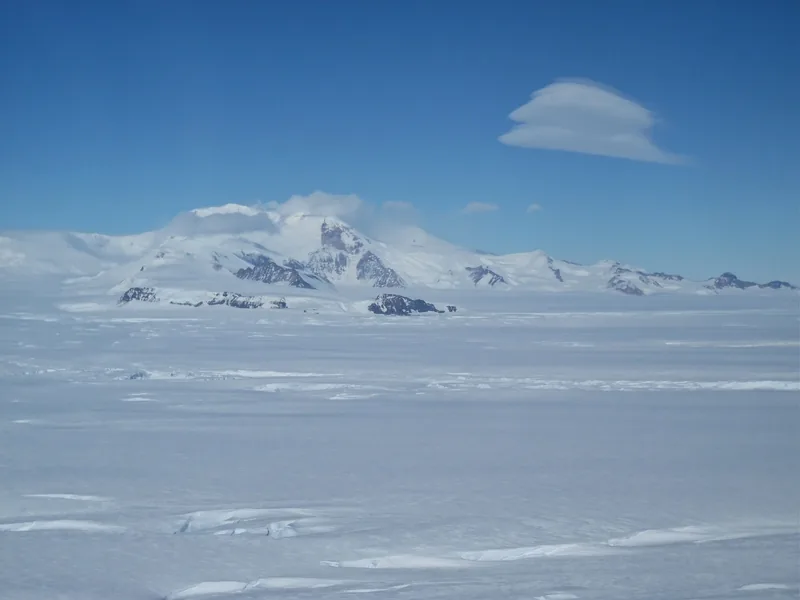
File captions, including Gemini 6A’s open-cell stratocumulus and the two silent NOAA titles, are quoted in the articles and credits, not silently promoted into this table.
Enjoyed a desk of official cloud genera, two height tables, and a few unusual shapes?
No pop-ups. No intrusive advertising. Just interesting stuff. A little support helps the next climates.im site get built.