Myths versus facts
Myths versus official wording.
20,000 feet is not silently replaced by 18,000. Asperitas is a 2017 supplementary feature, not a missed genus.
Each “myth” below is a claim we have actually met. The answers are official wording, or a labelled file caption, not a vibe.
Myth: There is one official Met Office height table for high cloud.
Fact: There are at least two. The main clouds page, and the 2014 observers’ guide, use 20,000 feet or above over the British Isles. [source] [source] The schools page uses 18,000 to 45,000 feet. [source]
Myth: The ten genera were Howard’s original list in 1802.
Fact: The Met Office says Howard proposed a classification in 1802, in The Modifications of Clouds, splitting clouds into three main types — stratus, cumulus and cirrus — and that the WMO later extended this to ten genera. [source]
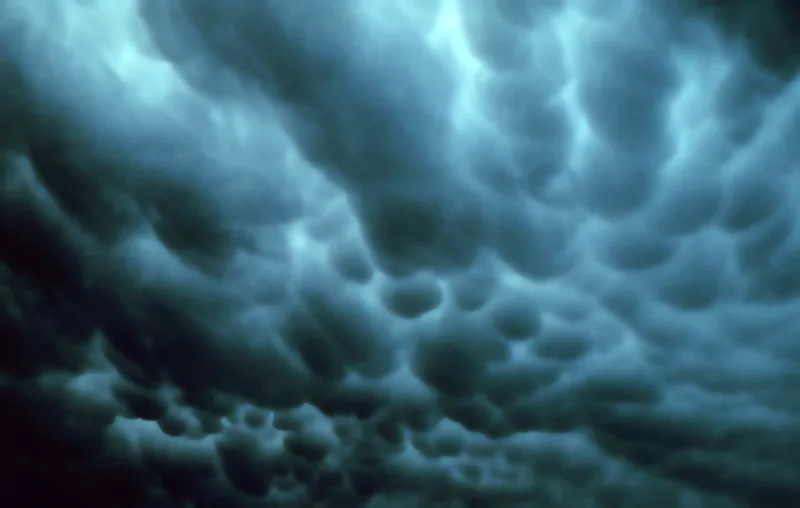
Myth: Asperitas has always been one of the ten genera.
Fact: It was added in 2017 as a supplementary feature, not as a genus, and occurs mostly with Stratocumulus and Altocumulus. [source] [source]
Myth: A photograph titled asperitas is an official Atlas type specimen.
Fact: Not on this site. The CC0 still is labelled with the file’s own title. The Atlas definition is quoted separately.
Myth: Lenticular clouds and mammatus form in the same kind of air.
Fact: The Met Office’s 15 September 2026 blog treats them as opposites in that sense: lenticulars in stable air around hills and mountains; mammatus most commonly with thunderstorms and an unstable atmosphere. [source]
Myth: Noctilucent clouds are just cirrus after dark.
Fact: NASA Johnson’s caption treats them as high-altitude clouds only visible when the Sun is below the horizon and illuminating them. This desk does not fold that official sentence into the ten genera.
Myth: Every NOAA photograph on this site comes with a full official scene caption.
Fact: Two do not. Cumulus clouds14 - NOAA and “Above the stratocumulus looking at multi-layers of clouds - NOAA” have titles and dates, and no photographer and no scene caption. The gap is left visible.
Myth: Unusual clouds belong on a storm-warning site.
Fact: Wild weather events belong on storms.im. This desk stays with genera, official height tables, and named features, including those that happen to appear on a thunderstorm day.
Enjoyed a desk of official cloud genera, two height tables, and a few unusual shapes?
No pop-ups. No intrusive advertising. Just interesting stuff. A little support helps the next climates.im site get built.