High cloud
High ice, a halo, and night-shining cloud
Two official high-cloud height tables, a 22° halo in cirrostratus, and noctilucent clouds that wait until the Sun is below the horizon.
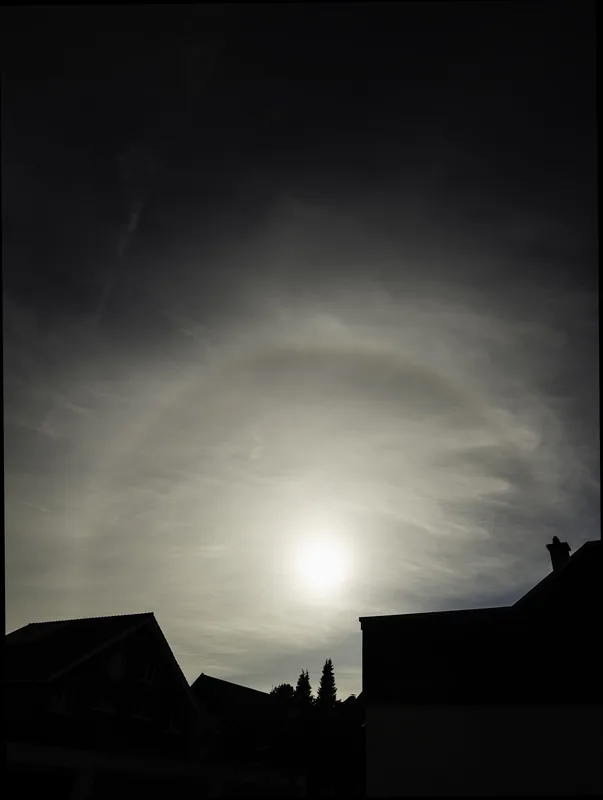
High clouds, on the Met Office’s main British Isles table, usually have bases at 20,000 feet or above, and the three genera are Cirrus, Cirrocumulus and Cirrostratus. [source] On the schools page, high clouds “are usually composed solely of ice crystals and have a base between 18,000 and 45,000 feet (5,500 and 14,000 metres),” and cirrostratus is described as a transparent sheet, often with a halo. [source]
The photograph above is that halo in practice: a 22° halo centred on the sun, in cirrostratus, on 1 March 2024. The file description says this form is formed by ice crystals in the upper troposphere. It is a credited caption, sitting beside the official Met Office wording, not instead of it.
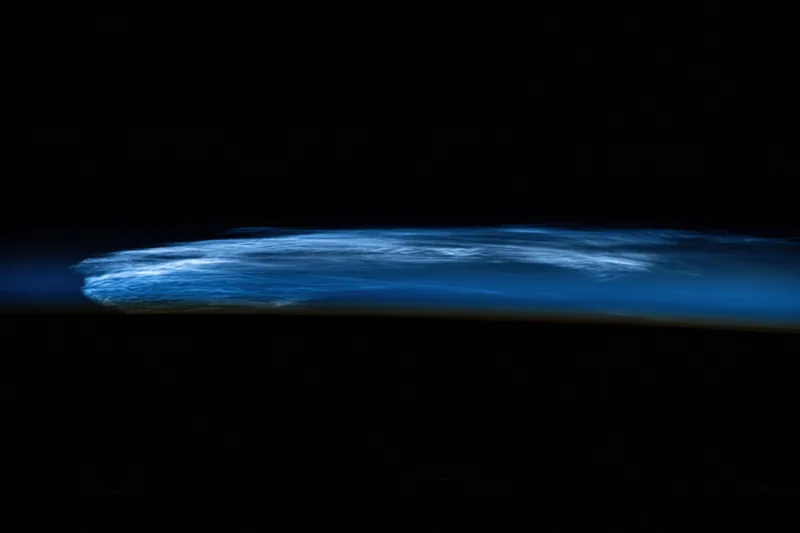
Noctilucent clouds are higher still in the official NASA sentence, and they are not one of the ten genera on the Met Office table. They are “high altitude clouds only visible when the Sun is below the Earth's horizon and illuminating them,” photographed from the International Space Station on 18 July 2024, 258 miles above eastern Turkey. This desk keeps that official caption, and does not quietly fold night-shining clouds into cirrus.
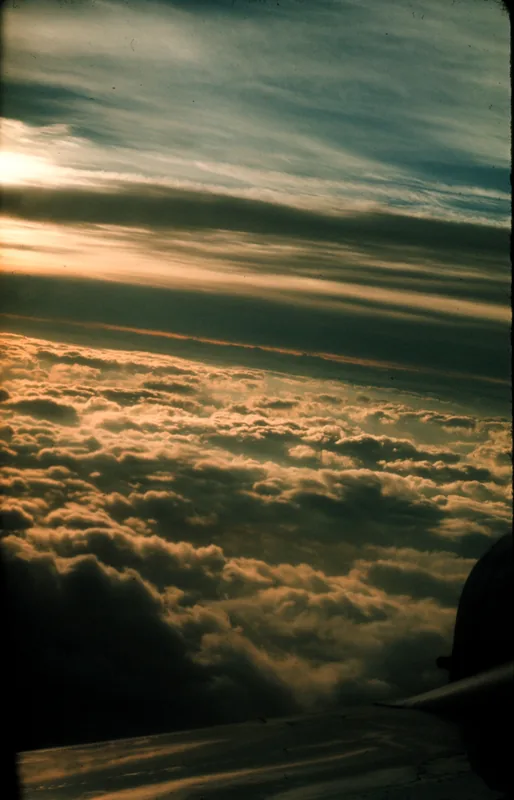
A view from above a stratocumulus layer, looking at further layers, is a reminder that height is a stack, not a single number. The NOAA file used here has a title and a date, 15 November 2005, and no further official scene caption. The title is left to do the work.
Enjoyed a desk of official cloud genera, two height tables, and a few unusual shapes?
No pop-ups. No intrusive advertising. Just interesting stuff. A little support helps the next climates.im site get built.